 Dead Sea Tours
Masada Cable Car or Snake Path: How to See the Fortress on a Dead Sea Day
Masada cable car or Snake Path? Take the cable car if you want a guided visit with time left for the Dead Sea. Take the Snake Path if you want the sunrise climb. That is the whole decision. Masada is a mountain-top fortress on a plateau rising over 400 m (1,300 ft) above the Judaean Desert floor above the western shore of the Dead Sea. Herod the Great built palaces, storerooms, bathhouses and a water system there between about 37 and 4 BC, and in the First Jewish-Roman War it was the last holdout of Jewish rebels until 73/74 AD. Today it is a UNESCO World Heritage Site. You reach the top by cable car in about 15 minutes, or on foot up the Snake Path on the east side. This page explains what is actually on the plateau, the history in brief, and which of the Masada and Dead Sea tours gives you which version of the visit.
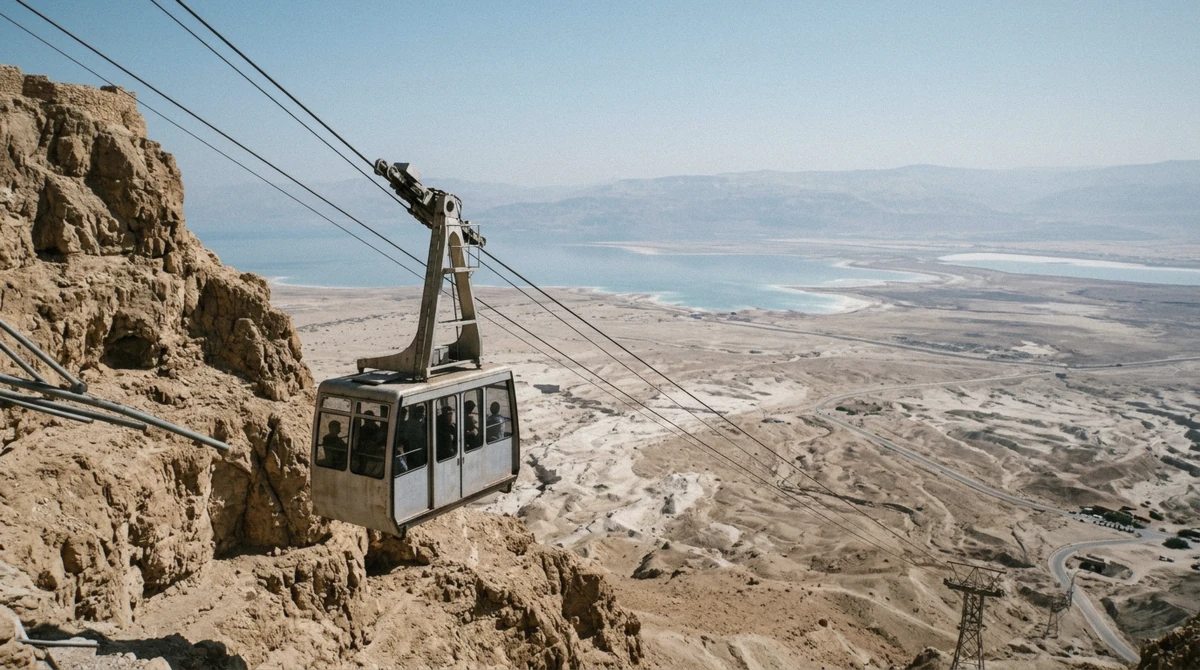
Illustrative image of the Masada cable car above the Dead Sea.
Quick answer Cable car for guided comfort, Snake Path for the sunrise climb
The cable car runs up the east side of Masada and the ride takes about 15 minutes. It is included in the full-day coach tours from Tel Aviv and Jerusalem, where a professional guide walks you around the fortress for roughly 1.5 to 2 hours. The Snake Path is the walking route up the east face, and the sunrise tour climbs it in the dark in both directions, which the listing says needs moderate fitness. On the coach trips Masada entry and the round-trip cable car are already in the price. On the sunrise trip you pay the 37 ILS ($11.92) entry on the day and there is no cable car at all. If seeing the sun rise over the Moab Mountains matters more than comfort, the Snake Path wins, otherwise the cable car is the practical choice on a day that also includes floating.
Key takeaways
- The full-day tour from Tel Aviv with hotel pickup bundles Masada entry, the round-trip cable car and a guided fortress tour into one price.
- For the climb itself, the Masada sunrise hike with Ein Gedi and the Dead Sea goes up the Snake Path in the dark and back down the same way.
- The full-day tour from Jerusalem runs the same cable-car programme as Tel Aviv but is cheaper because the drive is shorter.
- Masada entry is 37 ILS ($11.92) on the sunrise listing, which pays it on the day instead of at booking.
- If you only want the sea and no fortress at all, see our guide on whether the Dead Sea is worth visiting.
Cable car or Snake Path at a glance
If You want a guide explaining the ruins and an easy climb
Book a coach day with the cable car, such as the Masada and Dead Sea full-day tour from Jerusalem.
If You want to watch the sunrise from the plateau
The Snake Path climb on the sunrise hike, Ein Gedi and Dead Sea tour is the only listing that does it.
If You are travelling with children under 4 or with limited mobility
Take the cable car. Both coach tours use it and the sunrise climb is rated moderate. Note that none of the Masada listings suit wheelchair users.
If You have limited time or a small budget
Skip Masada entirely and float instead, for example on the Dead Sea half-day beach trip from Jerusalem.
If You are based in Amman
Masada is on the Israeli side and the listings from Amman stay in Jordan, so you would need a separate crossing day.
What is on the Masada plateau
The summit is a flat plateau, not a single ruin. Herod built a complete desert palace complex on it, supplied by its own water system. A standard guided visit of about 1.5 to 2 hours, which is what the coach tours allow, covers the main buildings.
The sunrise climb gives you the same plateau at the end of it, just self-guided and after a harder ascent.
The table lists the main sights you walk past on any visit, in roughly the order a guide shows them.
| Sight | What it is |
|---|---|
| Herod's Northern Palace | A three-tiered palace hanging over the cliff face, the most dramatic structure on the plateau |
| Storerooms | A row of magazine rooms that held food and supplies for the fortress household |
| Bathhouses | Roman-style bathhouses, part of Herod's building programme |
| The water system with 12 cisterns | Cisterns cut into the mountain and filled by channels, storing water in one of the driest places on Earth, where rainfall is barely 50 mm (2 in) a year in the south of the Dead Sea basin |
| Mosaic floors | Decorated mosaic floors in the palace and bath buildings |
| The synagogue | Described by the tour listings as the oldest synagogue in Israel |
| The Byzantine church | A later church from the Byzantine period, evidence the site stayed in use long after 73/74 AD |
| Views over the Dead Sea | Open views across the Judaean Desert to the Dead Sea, the lowest land on Earth at 439.78 m (1,443 ft) below sea level, and to the Moab Mountains in Jordan |
Two hours is enough for all of this at walking pace with a guide. If you climb the Snake Path you arrive earlier and can linger, but you also spend energy on the ascent that the cable car visitors keep for the ruins.
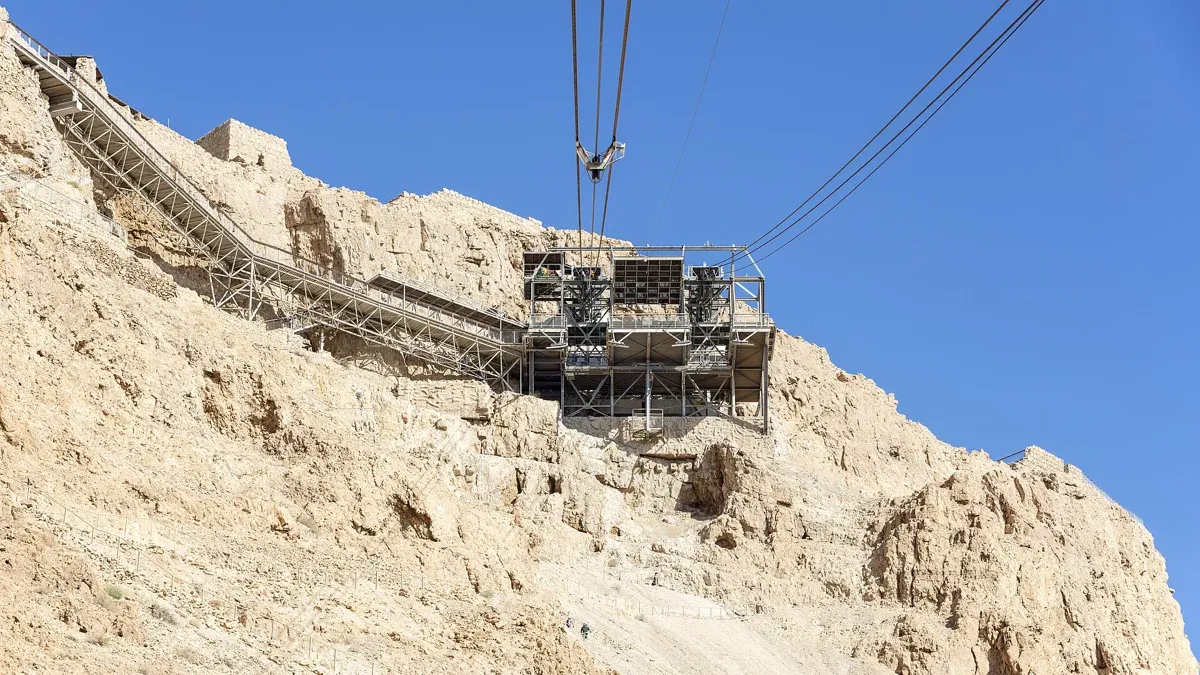
The Masada cable car. Photo: Godot13, CC BY-SA 4.0, via Wikimedia Commons.
The history in brief
Herod the Great built Masada as a refuge and palace complex between about 37 and 4 BC. He chose a natural plateau that is nearly impossible to assault, ringed by cliff walls, and equipped it with palaces, storerooms, bathhouses and cisterns that could keep a court supplied in the desert.
During the First Jewish-Roman War the fortress became the last holdout of Jewish rebels. The siege ended in 73/74 AD, after which the site passed out of use as a fortress and later gained a Byzantine church. Masada is now a UNESCO World Heritage Site.
You do not need deep historical knowledge to enjoy the visit. A guide on the coach tours covers the essentials while walking the plateau, and the ruins themselves tell the story clearly enough for a first visit.
Cable car vs Snake Path compared
The two routes up are not really alternatives in difficulty, they are different experiences. The cable car runs up the east side and the ride takes about 15 minutes on the Jerusalem coach tour. The Snake Path climbs the east face on foot, and the sunrise tour uses it in both directions.
Here is how they compare on the things travellers actually ask about.
| Detail | Cable car | Snake Path |
|---|---|---|
| Time up | About 15 minutes | Climbed before dawn on the sunrise listing, exact duration not stated by the listings |
| Effort | None | Moderate fitness needed for the climb and descent, per the sunrise listing |
| Cost | Included in the coach tours from Tel Aviv and Jerusalem | No cable car, Masada entry of 37 ILS ($11.92) paid on the day |
| Guide | A professional guide leads the fortress tour | Self-guided, a host and driver only |
| When | Mid-morning on the coach programme | In the dark, to reach the top before sunrise |
One honest caveat on cost. The listings do not state a standalone cable car fare, only that the round-trip cable car is bundled into the coach tour prices and absent from the sunrise trip. The entry figure of 37 ILS ($11.92) comes from the sunrise listing, which charges it separately.
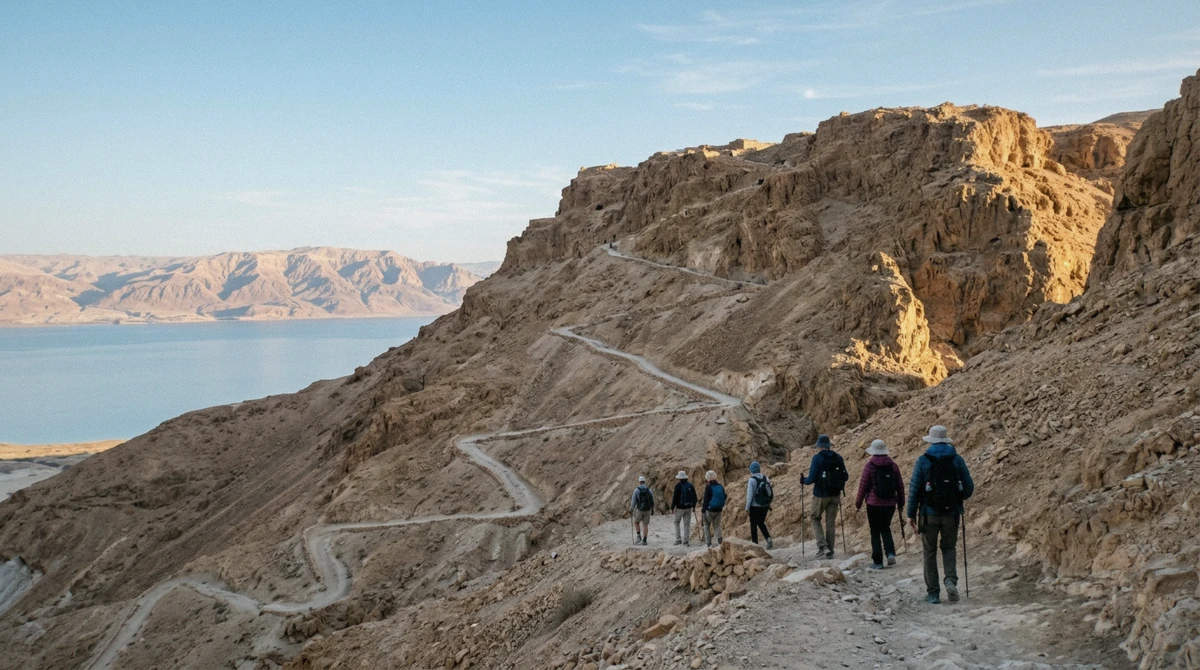
Illustrative image of the Snake Path in morning sun.
Which trip gives you which Masada
Only some of the trips compared here include Masada at all, and they split cleanly into two styles. The coach trips use the cable car and a guide. The sunrise trip uses the Snake Path and no guide.
If Masada is the reason you are booking, this is the choice that matters most, more than the beach or the bus.
| Trip | Route up | Time on the plateau | Guide on site | Price |
|---|---|---|---|---|
| Masada and Dead Sea Full-Day Tour from Tel Aviv with Hotel Pickup | Cable car | About 2 hours | Yes, guided fortress tour | $125 per person |
| Masada and Dead Sea Full-Day Tour from Jerusalem with Hotel Pickup | Cable car, about 15 minutes | About 1.5 hours | Yes, guided fortress tour | $115 per person |
| Masada Sunrise Hike, Ein Gedi and Dead Sea Tour from Jerusalem | Snake Path, both directions | Not stated by the listing | No, self-guided with a host | $106 per person, entry extra |
Of the coach options, the Tel Aviv trip is the most reviewed Dead Sea day in the catalog at 4.5 from 1,534 reviews, with entry, cable car and the beach fee in the price. The Jerusalem version is $10 cheaper because the drive is shorter, roughly 1 hour 45 minutes from Jerusalem to Masada by the listing timeline. Both give about 1.5 hours floating afterwards.
For a fuller picture of every option, browse the Dead Sea tours with Masada on the homepage.
Every other listing on this site, including all the trips from Amman and the Bethlehem and half-day options from Jerusalem, does not visit Masada. The Bethlehem and Dead Sea day tour from Jerusalem stops at the sea-level sign in the Judaean Desert and then spends about 2 hours at the sea, but the fortress is not on its route.
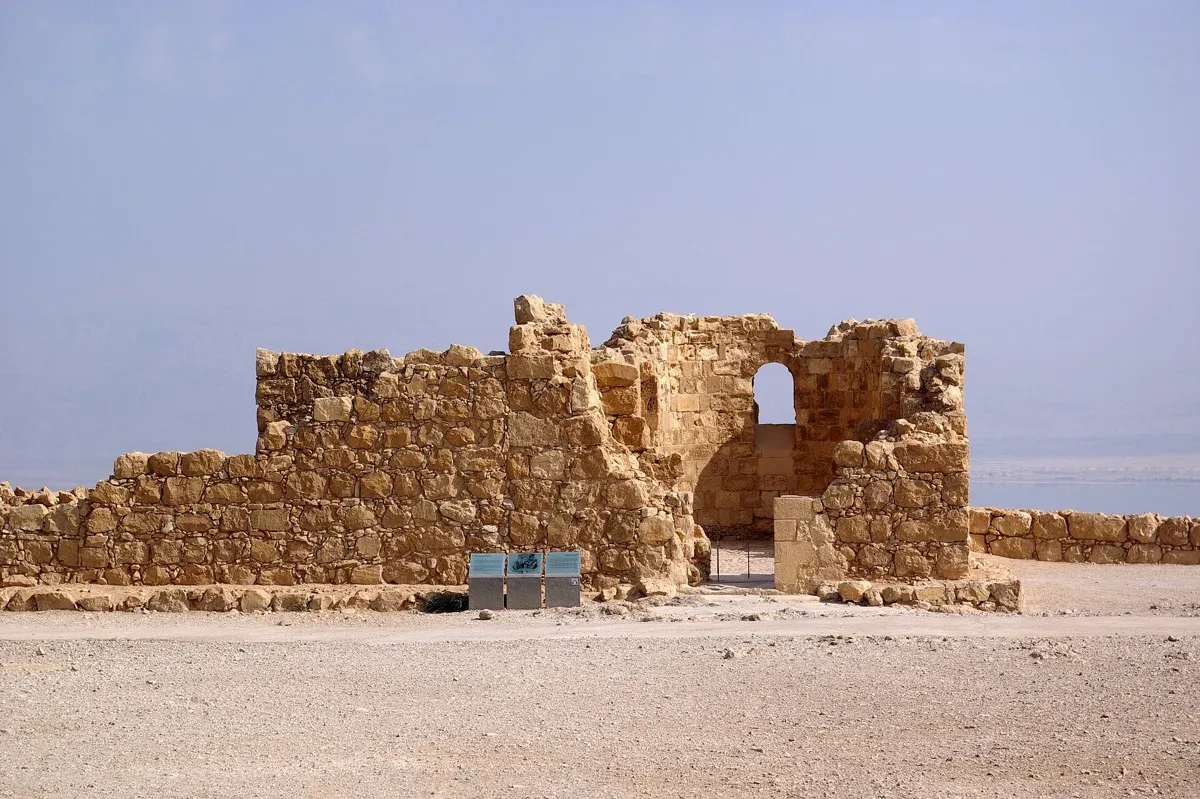
The Byzantine church on the Masada plateau. Photo: Berthold Werner, Public domain, via Wikimedia Commons.
Sunrise climb vs midday cable car
The sunrise version changes the character of the whole day. You leave Jerusalem at night, climb the Snake Path in the dark, and watch the sun rise over the Moab Mountains from the plateau. The listing is self-guided, so you explore the ruins on your own, then continue to the Ein Gedi Nature Reserve with its springs and waterfalls before floating in the Dead Sea.
It is rated 4.6 from 249 reviews and costs $106 per person.
The midday cable car version is calmer. You sleep at your hotel, get picked up, ride up in 15 minutes, hear the history from a guide and still reach the beach for about 1.5 hours of floating. You trade the dawn view for comfort and explanation.
Heat is the real argument between them. Average afternoon highs at the southern Dead Sea reach 38.3°C (101°F) in July and 36.4°C (98°F) in June, against 19.3°C (67°F) in January. From June to September the shore is very hot by midday, which is exactly why the sunrise climb exists.
In winter the cable car option is perfectly comfortable and the pre-dawn climb gets cold at the top.
Heat, entry fee and what to bring
Masada entry is 37 ILS ($11.92) per the sunrise listing, which collects it on the day. On the Tel Aviv and Jerusalem coach tours, Masada entry and the round-trip cable car are already included in the ticket price, so you pay nothing extra at the gate.
The desert around Masada is very dry. Rainfall is scarcely 100 mm (4 in) a year in the north of the Dead Sea basin and barely 50 mm (2 in) in the south. Bring more water than feels necessary.
- A sun hat, sunglasses and high-SPF sunscreen
- At least 2 litres of water
- Hiking shoes if you are climbing the Snake Path, comfortable shoes for the cable car version
- A passport, the coach listings require it and the sunrise listing accepts a copy
- Swimwear, a towel and flip-flops if the day continues to the sea, and you can rent a towel for 15 ILS ($4.83) at the sunrise meeting point
Pack for both halves of the day. The sunrise listing explicitly asks for hiking shoes and water, while the coach listings ask for comfortable shoes and swimwear. Our guide on what to bring to the Dead Sea covers the floating half in more detail.
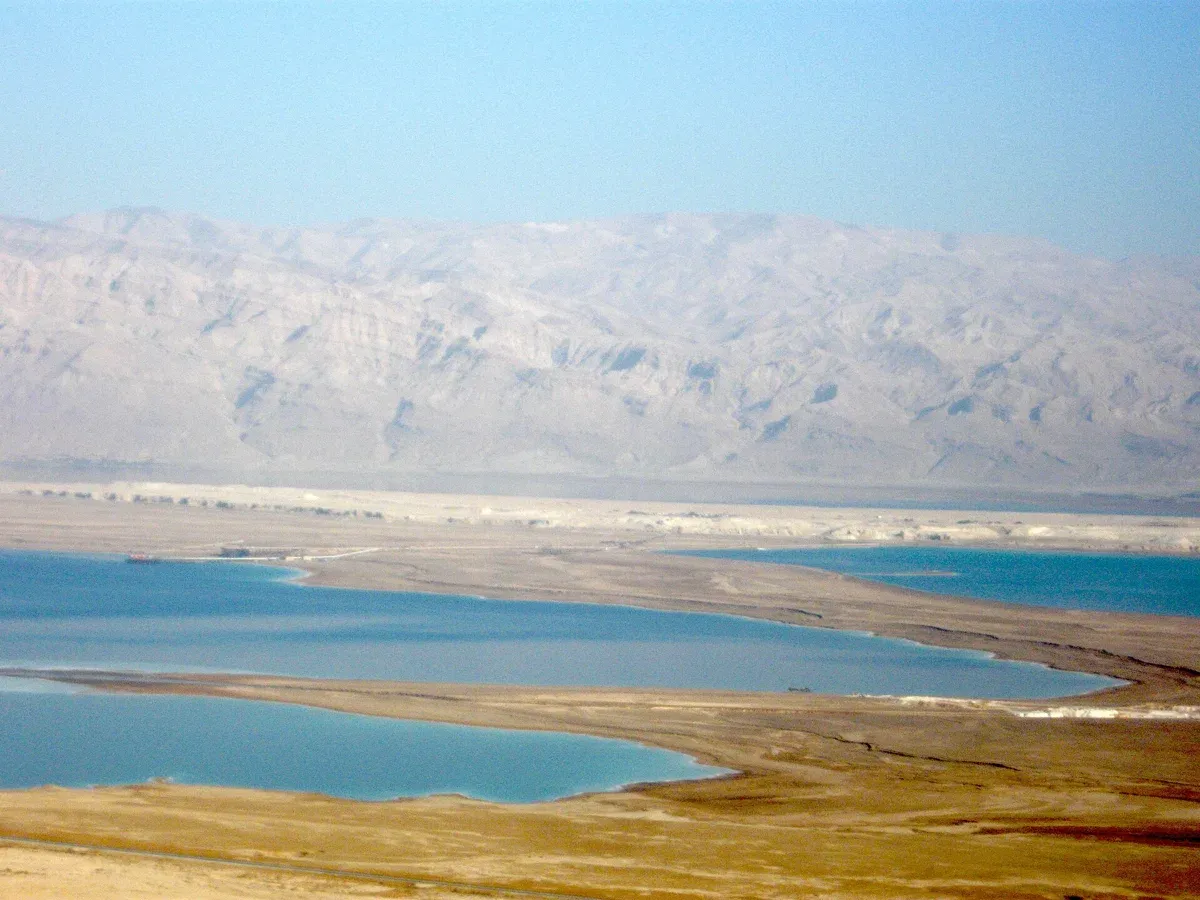
The view east from Masada over the Dead Sea toward Jordan. Photo: Unibrow1994, CC0, via Wikimedia Commons.
Three Questions Before You Choose
Most travellers can settle the cable car or Snake Path question with three answers. Is the sunrise the point of the day? Is everyone in the group fit for a climb and a descent in the dark?
Do you want the history explained by a guide on the plateau? A yes, yes and no points to the sunrise hike. Anything else points to a coach day with the cable car.
- Sunrise matters and everyone is fit: the sunrise hike up the Snake Path
- Children under 4 in the group: neither Masada listing on the coach days takes them, so look at the half-day beach trip instead
- Pregnant traveller or limited mobility: a cable car coach day, not the sunrise climb
- You want a guide: a cable car coach day from Tel Aviv or Jerusalem
How a Masada day fits with the rest of the region
A Masada morning pairs naturally with Ein Gedi and Qumran. The Tel Aviv coach stops for lunch near Qumran for an extra fee and drives back past the caves where the Dead Sea Scrolls were found. The Jerusalem coach adds a roadside view of the Good Samaritan site.
The sunrise trip walks at Ein Gedi instead, entry there is 31 ILS ($9.99) paid on the day.
From Amman the picture is different. Jordan has no free public beach on the sea, so the day trips there use hotel or resort access instead, about an hour from Amman. Masada sits on the far shore and the Jordan listings stay inside Jordan, so you cannot combine the two in a single booked day from these catalog options.
If you want sea time in Jordan, see our guide on the Dead Sea in Israel or Jordan.
If you are choosing a season rather than a route, our guide on the best time to visit the Dead Sea walks through the months in detail. In short, March to April and October to November combine warm water with bearable afternoon temperatures of 24°C to 32°C (76°F to 89°F).
Practical notes before you book
The Masada listings all run about 10 hours door to door. The coach trips are not suitable for wheelchair users or children under 4, and the sunrise trip is not suitable for pregnant travellers or people with mobility impairments and asks for moderate fitness for the climb and descent. Free cancellation up to 24 hours before the start applies to all of them, so you can hold a place while you decide between routes.
On the coach trips lunch is not included. The Tel Aviv version stops near Qumran with lunch as an extra fee, and both coach listings exclude food, drinks and tips. The sunrise listing excludes entry fees, food and a towel.
Budget for the on-the-day costs in addition to the ticket price.
Questions and Answers
Should I take the cable car or walk up Masada?
Take the cable car if you want a guided tour of the fortress with energy left for the beach, which is how the full-day coach trips from Tel Aviv and Jerusalem run. Walk up if the sunrise over the Moab Mountains is the point of your day, which is what the sunrise hike does via the Snake Path in both directions. The climb needs moderate fitness, the cable car needs none.
How long does it take to walk up the Snake Path?
The listings do not state an exact climbing time. What they do say is that the sunrise tour climbs it in the dark to reach the top before sunrise, descends the same way, and asks for moderate fitness for both directions.
How much is the Masada cable car?
The listings do not give a standalone cable car fare. On the Tel Aviv and Jerusalem coach tours the round-trip cable car and Masada entry are included in the ticket price of $125 and $115 per person respectively. On the sunrise tour there is no cable car and you pay entry of 37 ILS ($11.92) on the day.
What time does the Masada Snake Path open?
The listings do not state official opening hours for the Snake Path. What they confirm is that the sunrise tour departs Jerusalem at night and climbs in darkness to arrive before sunrise, so the path is accessible before dawn for that climb.
How long do you need at Masada?
The coach tours allow about 1.5 to 2 hours on the plateau with a guide, which covers the palaces, bathhouses, cisterns and views at a steady pace. The sunrise listing does not state its time on top, but you arrive before dawn and explore on your own.
Is Masada worth visiting?
If you care about archaeology, desert landscapes or the history of the revolt, yes, it is a UNESCO World Heritage Site and unlike anywhere else on the Dead Sea shore. If you only want to float, the half-day beach trips deliver that for $50 per person without a 10-hour commitment. Our guide on whether the Dead Sea is worth visiting helps you decide what your day should prioritise.